Wednesday, October 29, 2014

Strength and Conditioning for Combat Athletes


There are a lot of individuals involved in combat sports who think that in order to get better at it, they just need to do more of the sport. In essence, this is correct. Working on sport specific technique is the best way to improve, but having a solid strength and conditioning program is equally important and should not be ignored. This aspect of training for competition is oftentimes what separates the good athletes from the great.


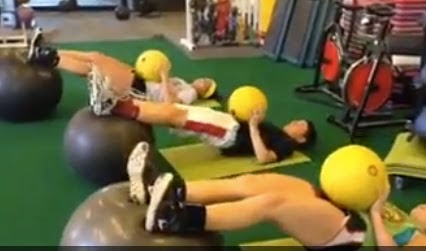
Two Brazilian Jiu Jitsu Athletes perform partner planks


Why is strength training so important for combat sports? Being technically skilled is great but if you don’t have a solid basis of strength, you will never reach your potential. If two guys weigh the same and have the same skill level who do you think will win- the stronger or weaker guy?Strength training makes you more powerful. Ask anyone in a combat sport if being explosive and powerful is an asset and no one will say “no”. 

Strength training decreases the risk of injury and combat sport athletes are prone to some of the worst injuries. The more durable you are as an athlete, the better you will be and the more likely you are to improve longevity and compete for a longer period of time. It will help build up areas that, if left untrained, would become plagued with injury: knees, necks, etc.

Conditioning should be based on the sport. For example, five minutes of rolling in Jiu Jitsu is comprised of quick bursts of action interspersed with periods of lower intensity. Your body must be able to handle five minutes of non-stop moving including bouts of high intensity action. Therefore, conditioning should mimic that. That’s why implements like prowlers and sandbags are great for combat athletes- they mimic conditioning against a heavy load (your opponent).
Strength training should mimic the sport as well. For our Jiu Jitsu athletes, we do a lot of grip work to enhance their grip on the gi, neck work to prevent injuries, and we work on hip strength since it’s crucial to a number of positions you could find yourself in. Training revolves around heavy squats, pulling, and pushing to get our athletes ready for the mats. 

Strength and conditioning training is not only crucial for stronger, more powerful, and healthier athletes but it’s also important that your strength and conditioning training is specific to your sport. If you are a combat athlete, your strength and conditioning program would look drastically different than that of a soccer or basketball player, but the most important thing is that you understand the importance of having one in the first place.

Tuesday, October 28, 2014

The Most Important Thing

The Most Important Thing

…is family. 

Sometimes we get so caught up in our goals that we forget about the people who are propping us up. The people who are there to break the bad news and stick around for our reaction. Family doesn’t always mean blood relation, so I suppose the proper word for what I am trying to convey is COMMUNITY. 

This past weekend, I competed at the Lexen Extreme Fall Classic and I got a reminder of what it meant to personally be a part of a community. The profound sense of acceptance and support that I received over the weekend is something I will never forget. This article will serve two purposes: to recap the meet and show you why building a community is so important.

I competed in the 132-pound class and finished the day with a  215-pound squat, 135-pound bench press, and 260-pound deadlift. Though I didn’t achieve a couple of my goals, I was happy to get a feel for the 132-pound weight class and set a PR total of 610-pounds with the support of many great lifters, coaches, and friends. Some of these people I’d never personally met before but corresponded with on social media, and some of them I’ve known for quite some time.  Regardless, when I stepped onto the brightly-lit platform, it made all the difference that someone was there to support me when I really needed it.


When I say I needed it, I really did. After my missing my first deadlift attempt, I thought I was going to have to cut it there and bomb out. My hip-popped during the lift and my entire left leg was throbbing as I swallowed tears. I was told to pull conventional instead of sumo and the thought of that made me extremely nervous. My sumo pull has always been much stronger than conventional AND I’d maxed my conventional pull just a few weeks earlier and it was super slow. Not only that, but the weight I opened with was five pounds heavier than that super slow conventional pull. There was no way I’d be able to pull it off with an injury. Surprisingly, I PR’d my conventional deadliest by 25 pounds.

In all honesty, I started lifting weights because I just liked how it felt. But now it goes much deeper than that. Now I’m little more competitive, I’ve got training partners, and it kind of just feels like training and competing is something productive to do with my pals. We set our own goals, but we also know that we need each other in order to achieve those goals. This is why building a community is the key to achievement.

It was almost exactly a year ago that I started training at The Spot Athletics and at first l felt like the odd-man-out. Constantly getting picked on, making dumb mistakes, and always asking “Will I get yelled at if I do such-and-such?” Now, I feel a part of a family. Going further, I’ve expanded my network of friends and it was this small group that pushed me at the Fall Classic. It was these guys who offered verbal support, shared their ammonia to get me pumped, rubbed baby powder on my thighs before each deadlift attempt, and inspired me to believe in myself.

Our very own Nic Bronkall, or Coach B, took the time out of a beautiful Saturday to be cooped up at a powerlifting meet to handle me, because here at The Spot Athletics, we have something that not a lot of gyms have: a family. We want everybody to achieve their goals and be motivated to be the best person they can be. 

Savannah Steamer

Are You Hard"core"?

People throw the word “core” around because it is the latest catch all buzz word.  But do you even know what the “core” is?  When most people are asked this question they usually make a gesture towards their belly in a circular motion.  Basically indicating that they are using a word to which they have no comprehension on the definition.  Doctors, Physical Therapists and sport coaches love to use the word “core” as their catch all explanation as to why there is a lack in performance or an injury.

Here at The Spot Athletics, we pride ourselves on not using buzz words and catch all phrases but rather educating ourselves on how to solve real problems and create better athletes.  What most people are talking about when they refer to core is actually called trunk stability.  So get away from using nonsensical terms like “core” that people who have no clue what they are talking about use and talk about the muscles that create trunk stability, which many people aren’t fully aware of.

Contrary to popular belief, your trunk includes more than just your abdominal muscles. It consists mainly of your transverse and rectus abdominus, obliques (side), lats (back), glutes, lower back, and hip flexor complex. All of these muscles play a role in trunk stability which is literally at the center of most movements including daily life, weightlifting, and cardiovascular exercise.

Some great exercises to strengthen this muscle group are the plank, bird dog, and hanging leg raises. If you’ve trained at The Spot Athletics you’ve probably performed these movements or at least seen them performed at one point or another. For plank, start in a push up position on your elbows, keeping your back straight (avoid arching or hunching your back) and your butt down so that everything is in line. For bird dog start on your hands and knees with your hands directly below your shoulders and knees directly below your hips. Keeping your hips squared and your back straight, raise the opposite arm and leg (ex. Right arm, left leg). Lastly, for hanging leg raises, hang from a bar either by your hands or using straps. Bend your legs and lift your knees up to your elbows, keeping the motion under control. Control the movement down and avoid using momentum to swing your legs back up for the next rep.

So now that we’ve educated you on the word “core” and what the trunk is as well as getting you started with a few easy exercises to help you improve your trunk stability in and out of the gym, keep training and the progress will come.


Monday, October 20, 2014

Former Ohio Dominican baseball player, Bryan Rudolph, hired as strength & conditioning coach at The Spot Athletics.

Bryan with a 60'' box jump & 515lb deadlift during last Friday's training session

Bryan comes to The Spot Athletics with a great background in strength & conditioning and athletics.  As  a graduate of Pickerington Central High School, Bryan lettered in both football and baseball.  He went on to play collegiate baseball at Ohio Dominican University where he started all 48 games last spring. 

Bryan has his NASM Personal Trainer certification and upon graduation (Exercise Science) from ODU, he enrolled in graduate school for exercise physiology.  He is currently employed as the strength and conditioning coach for ODU’s baseball team as well as having trained at several facilities around Columbus before finding his new home at The Spot Athletics.

We are proud to add Bryan to our already great team of coaches.  Bryan not only talks the talk but walks the walk, as all of the coaches at The Spot Athletics do.  He embodies our values of education, hard work and honesty and will help build our already great baseball strength and conditioning program.  


To contact Bryan about strength and conditioning for your baseball player or for personal training, you can email him at Bryan@TheSpotAthletics.com.

Sunday, October 5, 2014

Fat and Cardio

                  Lately I’ve been hearing and seeing way too many diet and exercise fads that are ineffective, a waste of time, and in some cases, dangerous. I think it’s important to address some of these so that people can move on from these fads and actually make some real progress towards their goals. The top two I’ve noticed is the ever popular “No Fat” Diet and the obsession with 3 hour long bouts on the cardio machine to lose weight.

While I understand that the word “fat” would make people thing that eating it will make you fat, it’s a little more complicated than that. First of all, your body NEEDS fat in order to function, especially in women. Your body systems won’t run properly or efficiently without certain fats. Without fat, your body is less able to absorb vitamins such as A, D, E, and K. In addition, fat is a source of energy for your body at 9 calories per gram (calories = energy measure), whereas carbohydrates and protein only have 4 calories per gram. Lastly, having fat in your body is necessary for proper insulation.  Fat in your body helps to keep a normal, safe temperature. You may have heard about good fats and bad fats. Generally this is referring to unsaturated fats. Saturated fats, and trans fats. It’s a good idea to get most of your fat calories from unsaturated fat (mainly plant based), some from saturated fat (mainly animal and dairy based) and only a small amount, if any at all from trans fat (mainly fried and processed foods). So rather than trying to cut out fat all together from your diet, treat it as the essential nutrient it is and include the right types of fat. Some of the many good sources are avocado, almond butter, vegetable oils, and fatty fish.

I see so many girls at the gym spend hours upon hours using cardio machines like the elliptical and treadmill. Many people think that the best physical activity to lose weight is spending as long as possible doing cardio. Yes, you are burning calories during that time but if you really want to make progress, there are better ways to spend your time (and less of it). What a lot of people don’t know is that your muscle burns more calories than your fat does. Because of this, it’s important to incorporate strength training into your weight loss plan. Adding more muscle to your body will increase your metabolic rate and therefore help you to burn more calories. On top of that, strength training improves your bone health, increase your stamina, up energy levels, and has plenty of other great benefits. So rather than spend your whole gym time doing cardio, split it up and focus on strength training as well. You’ll see more progress faster and feel better at the same time, just make sure you’re using correct technique so as to avoid injury. If you’re unsure on how to lift weights and strength train properly or effectively, the coaches and trainers at The Spot Athletics are more than qualified to help you out and put you on the right path with classes and sessions for everyone from beginner to expert.

                  Hopefully I cleared up some misconceptions for you today and you can work more efficiently towards your fitness and weight loss goals. Good luck and happy lifting!


Tuesday, September 30, 2014

Top 5 things incompetent strength coaches do

I see videos from other facilities all the time and they are ridiculous.  They post them because they think they look cool for parents when in fact they have no clue what they are doing.  I wish they would just stop posting videos because although most parents have no idea what they are posting is awful (nor should they as this is not what they do), all the coaches at The Spot Athletics do & it drives us crazy.

It drives us crazy to see athletes at other facilities using poor form, senseless drills, and just plain wasting their time.  We value education and see it as our privilege to help young athletes excel at their sports and yet parents send kids to these other facilities and they are wasting their young athletes potential and the parents hard earned money.

Here are the top 5 things we have seen that drive the coaches here absolutely crazy. 


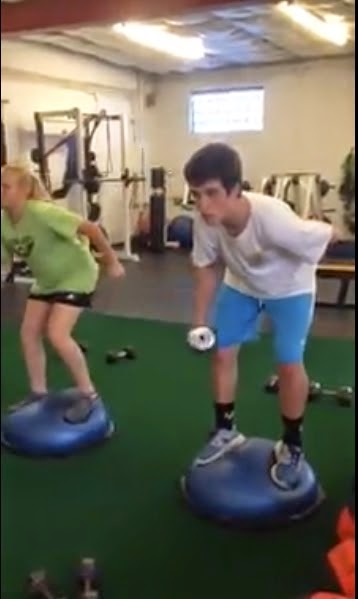
1.  Anything standing on a bosu ball.  


For the love of god, no sport is played on a bosu ball.  Unless you are 90yrs old and have trouble falling you should not be standing on a bosu ball for any of your training, unless of coarse your goal is to suck, then keep it up.


2. Endless ladder drills.  


I will only say this once.  Just because they are called
speed ladders doesn't mean they make you faster.  Speed ladders unequivocally DO NOT MAKE AN ATHLETE FASTER! If you are past 12yrs old then ladders are only good as a warm up, under 12 and they help with learning body control but at no age do they make you faster.  Think about it, no sport is player with those short steps and in a controlled pattern.  Sport is the ability to solve ever changing spacial awareness problems, not take tiny steps in a predetermined pattern.

3. Light weight exercises standing on one leg

Unless you are Daniel-son and Johnny's teammate swept your leg before the finals match, you will never, ever, do this in athletic competition.  It's called training specificity.  You must train for the demands of your sport to become better at it.  Light weight, high rep work is useless for building strength, but can be used for conditioning.  Standing on one leg while doing light weight is a flat out waste of time and is the result of making stuff up to keep kids entertained.  If you want to entertain your kids, take them to a movie, if you want them to be better at their sport, bring them to The Spot Athletics.


4. Not utilizing any significant external resistance


In order for an athlete to be stronger, jump higher and faster, they must impose a load that challenge their current threshold.  Ie: if you only use med balls, kettle bells and other light implements you will never get stronger.  The number one exercise that correlates to a higher vertical jump is the good old fashioned squat.  This has been proven time and time again in studies.  So why this new trend to move away from the barbell has started I don't know.  I do hope it continues so that our athletes can continue to kick the crap out of people who think lightly weight hip thrusts with their feet on a swiss ball will do anything for them when they get on the field of play.

5. Doing the basic lifts incorrectly

I think that the reason these other places don't squat, deadlift or do the olympic lifts is because they flat out have no clue how to properly teach them.  So instead of potentially hurting a kid with some real weight that would actually help them be a better athlete, they just throw down some med balls and say "all that heavy lifting stuff isn't good for athletes."  Well here at The Spot Athletics we take pride in being some of the top technicians in the big lifts.  We do consulting for as far away as Australia on correcting people's form in the big lifts.  So when these other places finally post a video of someone doing a lift with some actual weight, what you see is so awful, we kind of wish they wouldn't have done it and leave the actual training to the experts at The Spot Athletics.

Saturday, September 27, 2014

Managing Expectations and Setting Attainable Goals

This can be a sensitive and somewhat confusing topic for the majority or people, me included. What is a good goal? How can making goals, both short and long term, help me progress? What is considered a "bad" or unrealistic goal?

The other day, I was having a conversation with a client when she asked me how often should we measure her bodyfat. I told her every 12 to 16 weeks should be sufficient to see any progress that has been made and allow the body to correct for any irregularities that may arise during the period. I explained that if you were to measure every two weeks, for example, that the numbers may not indicate progress even though it is being made.

Now this may not be what some people want to hear. Most people expect to go home after each training session and see a little bit more ab definition, but that is unrealistic for a multitude of reasons. One of the most important duties of a trainer is to have your clients set short term goals that can be reached within a few weeks and have them monitor progress off of cycles of short term successes that will eventually lead to long term goals being attained.

When you reach a goal of any kind, no matter how small, it builds confidence. The confidence to work harder, eat better, and most importantly, keep exercising. For example, I would not allow a client to set a goal of gaining 10 pounds of muscle in 2 weeks because I know that this goal cannot be attained no matter how hard they work. A failure to reach a goal can be extremely counter-productive and even cause some people to give up on exercising all together. Obviously, this is not what we want. If a trainer allows unrealistic goal setting to persist, he/she has failed their client, not the other way around.

Although everyone wants to see progress fast and we live in a "give me now!" society, body composition and physiology can be the ultimate humblers as they are a test of patience and will power like nothing else. Those that can monitor their expectations and and work off of short-term successes will be the ones who have long-term positive changes. Remember, every 500 pound bench press started with a 200 pound PR, and every 5% bodyfat fitness model once dieted their ass off just to get under 10%. Fitness lifestyles do not discriminate by body type or genetic makeup. Those that have sustained successes from the beginning will be the ones who stick around for the long haul.

-Coach Bryce